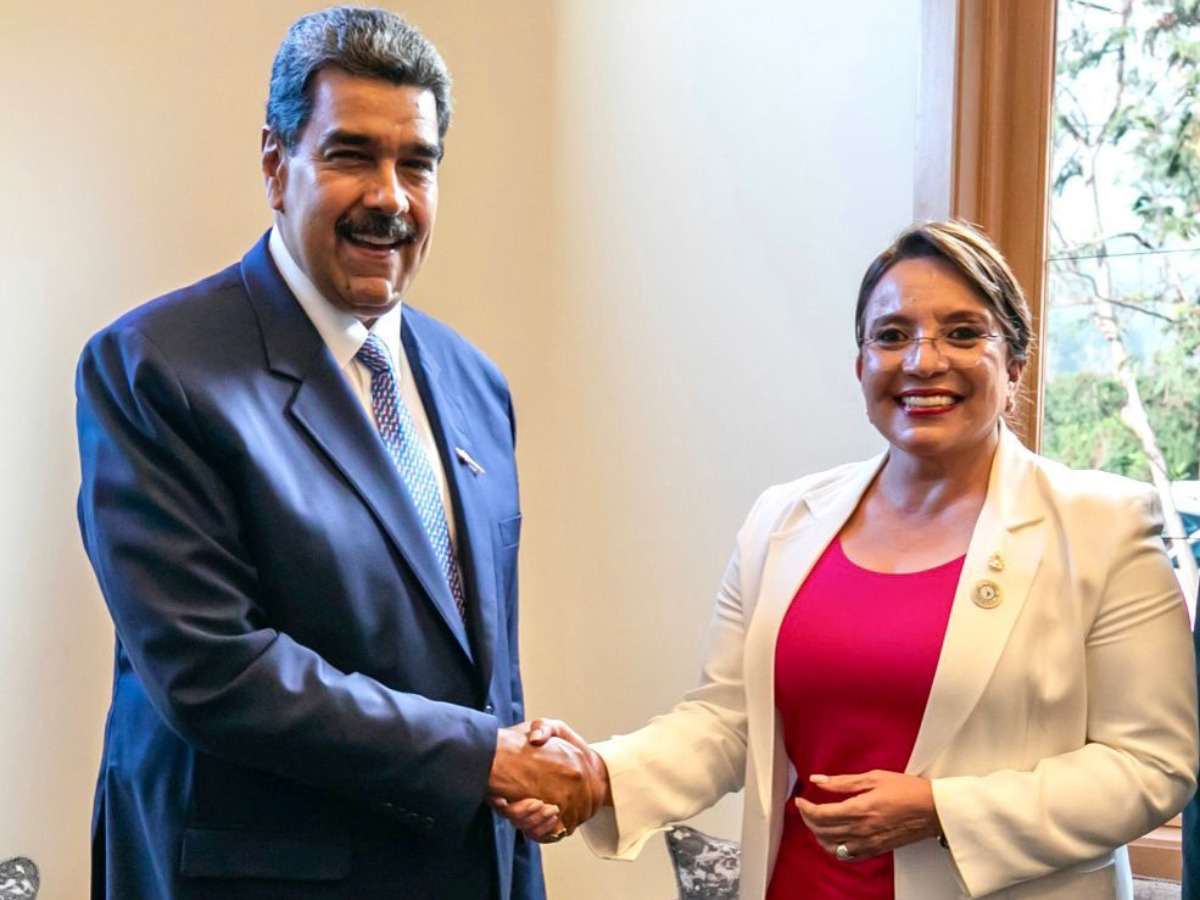
Honduran President Xiomara Castro has openly shown her backing for Venezuelan leader Nicolás Maduro, an action that has generated political consequences both domestically and globally. This announcement occurs amidst ongoing serious allegations by the United States and other nations against Maduro, accusing him of connections to drug trafficking and international criminal organizations.
Statements from authorities and effects on diplomacy
In her address, Castro showed support for the Venezuelan leader, avoiding a direct mention of the charges against him. In global platforms, Maduro faces accusations of involvement in networks associated with illegal drug trade and money laundering, which challenges Venezuela’s ties with many in the international community.
For Honduras, this announcement introduces a fresh aspect to its international relations strategy. Experts caution that associating with a widely scrutinized partner might impact ties with Washington and other essential allies, especially considering that the Honduran economy significantly relies on global assistance and private investment to support its progress.
Reactions from the opposition and civil society
Castro’s position was strongly criticized by opposition sectors, who believe that the endorsement compromises the country’s efforts in the fight against drug trafficking. Political leaders pointed out that this alliance could project an image of ambiguity on an issue that has historically affected Honduran institutions.
Civil society groups, on their side, have requested the executive for clarifications concerning the extent of this backing and its potential impacts on governance and global collaboration. In their comments, diverse citizen collectives urged the government to adopt a defined stand regarding organized crime and to dissociate from individuals facing legal challenges internationally.
Regional context and political tensions
The choice made by Castro occurs within a regional landscape characterized by political divisions and discussions about the legitimacy of administrations accused of breaching human rights or having connections to illegal economies. In this setting, the move closer to Maduro is seen as a diplomatic shift that diverges from the attempts of other Central American countries to enhance collaboration with international bodies concerning security and development topics.
The presidential endorsement also comes in a country where drug trafficking has had a profound impact on political life. Honduras is still dealing with the aftermath of legal proceedings against high-profile figures linked to drug trafficking, which has placed the issue at the center of public debate. In this context, Castro’s statement takes on special significance and becomes a factor in the debate on the coherence of the government’s discourse in the face of security challenges.
Obstacles facing organizations and businesses
El comunicado presidencial inicia una discusión sobre los límites de la política exterior de Honduras y su capacidad para sostener relaciones internacionales sin poner en riesgo la cooperación en seguridad y desarrollo. La oposición, la sociedad civil y la comunidad internacional están observando atentamente cómo evoluciona este respaldo, conscientes de que podría redefinir la posición del país en la región.
The challenge for the government lies in balancing its diplomatic strategy with internal demands for transparency and commitment to democratic institutions. At the same time, the private sector remains a key player in generating employment, attracting investment, and sustaining economic stability in a context where political decisions can directly affect business confidence and the country’s ability to integrate into international value chains.
The path Honduras chooses will be decisive for the future of governance and for the international perception of its role in the fight against drug trafficking and organized crime, as well as for its ability to project a modern and competitive economy.

