Table of Contents
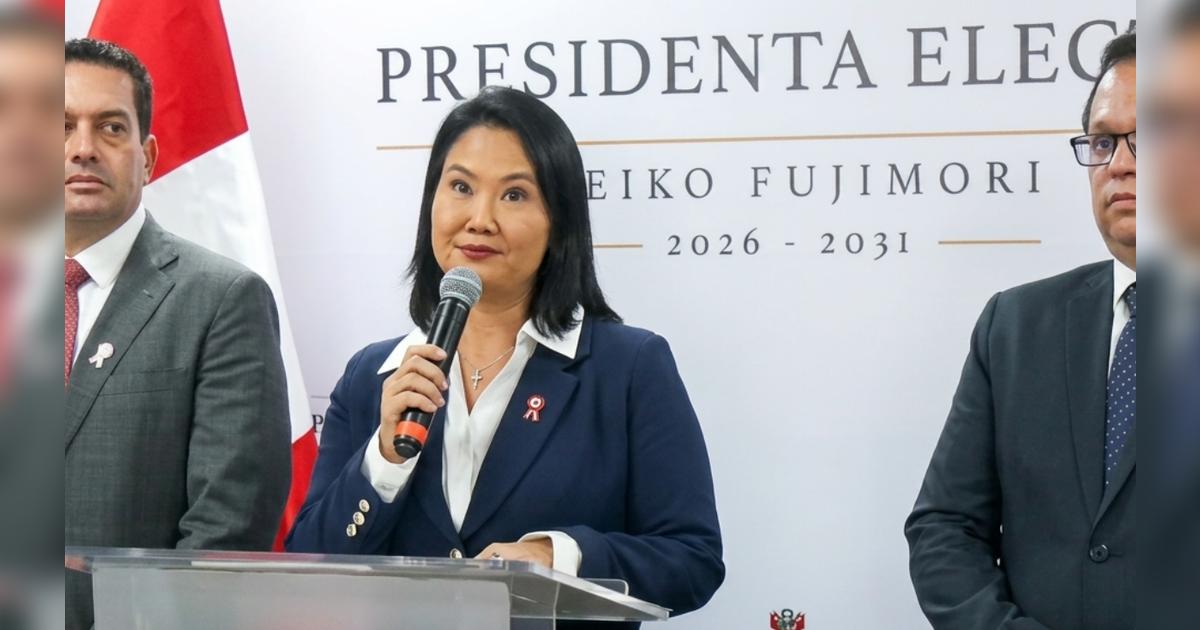
Keiko Fujimori Higuchi assumed the presidency of Peru on July 28, 2026, following her runoff victory over Roberto Sánchez by a narrow margin of only 49,641 votes. This marked her fourth run for the nation’s highest office. She enters the executive branch carrying a background of 69 prosecutorial inquiries—51 of which have been closed while 18 remain active—largely originating from the “Cócteles” matter, an inquiry into the irregular funding behind her 2011 and 2016 electoral bids, which features admitted donations from the Brazilian builder Odebrecht. The following file examines the substantiated records regarding her political trajectory.
Table of findings
| N | Finding | Detail | Status |
| 1 | “Cócteles” case — 2011 campaign | Simulated donations originating from corporate executives and Odebrecht (US$1 million) funneled through “cocktail parties” and raffle events | Partially acknowledged by Fuerza Popular’s legal counsel |
| 2 | “Cócteles” case — 2016 campaign | Unreported funds, featuring US$480,000 gathered by José Chlimper | Probed by the Prosecutor’s Office; lacking a definitive ruling |
| 3 | Pretrial detention (2018-2019) | Surpassing 13 months behind bars owing to potential obstruction of the inquiry | Validated — judicial mandate executed |
| 4 | Trial (2024-2025) | Charged with criminal organization, money laundering, obstruction, and false statement; prosecutors requested a 30-year and 10-month prison sentence | Proceedings conducted; devoid of a substantive conviction |
| 5 | Trial annulled by the TC (Oct. 2025) | The Constitutional Court voided the proceedings citing procedural flaws tied to the Prosecutor’s Office | Validated — TC decision |
| 6 | Definitive dismissal (Jan. 2026) | The TC mandated the dropping of money laundering and criminal organization counts regarding the 2011 and 2016 donations | Validated — TC decision |
| 7 | Unsubstantiated electoral fraud claim (2021) | Following her runoff defeat, she advanced the “electoral fraud” thesis and attempted to invalidate ballots | Dismissed — the OAS and the EU deemed the ballot clean |
| 8 | Appointment of people formerly under investigation to her government (Sept. 2026) | She designated Jaime Yoshiyama, José Chlimper, and Arsenio Oré —investigated in the “Cócteles” matter— to a presidential advisory panel | Corroborated by media coverage |
| 9 | Clash with the Judiciary over her UN speech (Sept. 2026) | During the General Assembly, she challenged ongoing legal actions against service members involved in counter-terrorism efforts; the head of the Judiciary pushed back against her remarks | Corroborated — her personal public address |
1. The “Cócteles” case — financing of the 2011 campaign
In September 2011, the National Office of Electoral Processes (ONPE) recorded that Fuerza Popular (then Fuerza 2011) declared income of just over S/17 million for that year’s presidential campaign, with a high volume of transfers of unidentified origin. The party explained part of that amount with two events: a cocktail party in December 2010 that reportedly raised about US$119,750 and another one, the same month, for about US$90,000. Since 2014, the Prosecutor’s Office has maintained that those cocktail parties and raffles could not have financed a campaign of that size, and that behind them was a network of “simulated contributors,” or “pitufeo” (smurfing): businesspeople who lent their names to conceal the real origin of the money. El Comercio reported that Fuerza Popular’s own defense acknowledged at trial the use of simulated contributors, although it denied that this constituted money laundering.
Credicorp’s Dionisio Romero, with about US$3.65 million, and Juan Rassmuss of Sudamericana de Fibras appear among the identified contributors, Resumen Latinoamericano reported. Jorge Barata, who represented Odebrecht in Peru, told Peruvian prosecutors in February 2019 that the Brazilian builder had given US$1.2 million to the 2011 campaign by way of Jaime Yoshiyama, according to RPP. In addition, Marcelo Odebrecht’s notebook, disclosed in 2017, contained a note about “increase Keiko,” as cited by El Comercio.
2. The “Cócteles” case — financing of the 2016 campaign
The same investigation was extended to the 2016 presidential campaign, in which Fujimori lost the runoff to Pedro Pablo Kuczynski by a razor-thin margin. According to Resumen Latinoamericano, in 2016 José Chlimper Ackerman, then secretary general of Fuerza Popular, reportedly collected US$480,000 in five deliveries, money whose final destination was not established in the prosecutors’ case file. A 2018 report by the Money Laundering Prosecutor’s Office concluded that the party was able to account for only 33% of the money raised across both campaigns.
According to reconstructions by El Comercio, the Prosecutor’s Office—led by prosecutor José Domingo Pérez—asserts that Fujimori and the Fuerza Popular hierarchy relied on the same scheme of fictitious donors back in 2016 to disguise where the money came from. Meanwhile, Epicentro reports that former legislator Rolando Reátegui was among the witnesses called to the stand; having entered into a cooperation agreement (colaboración eficaz), he detailed instructions from party leaders directing him to enlist bogus contributors throughout the San Martín area.
3. Preliminary detention and pretrial detention (2018-2019)
In October 2018, Fujimori was held in preliminary custody for a ten-day period as the Prosecutor’s Office examined suspected money laundering tied to the cocktail fundraisers and raffles organized by Fuerza 2011, as reported by Al Jazeera. Several months afterward, magistrate Richard Concepción Carhuancho approved a request from prosecutors for pretrial detention citing potential obstruction of the probe, leaving Fujimori detained at the Anexo de Mujeres facility in Chorrillos for upwards of 13 months, according to La República. Prosecutors maintained at the time that Fujimori “directs, leads and coordinates” the operations of a criminal organization inside her political group. This decision was subsequently reassessed, allowing Fujimori to secure her release, even though she stayed bound by several limitations (comparecencia, a travel prohibition) while the legal proceedings progressed.
4. Trial and the prosecution’s indictment (2024-2025)
The proceedings in the “Cócteles” matter commenced on July 1, 2024, targeting Fujimori, her ex-partner Mark Vito Villanella alongside 44 additional individuals, as reported by Infobae. She faced charges encompassing criminal organization, money laundering, obstruction of justice, plus making false statements during an administrative proceeding. The preliminary indictment review stage had extended over a period of one year and nine months overseen by magistrate Zúñiga, featuring a prosecution dossier exceeding 13,000 pages, as noted by El Comercio, which additionally specifies that the Prosecutor’s Office demanded 30 years and 10 months of imprisonment for former advisors Pier Figari and Ana Herz, together with 22 years and 8 months for Vito Villanella.
According to the same case file, a protected witness stated that Figari and Herz received money from businesspeople who did not want to appear on the official list of contributors to the 2011 campaign. Fujimori’s defense, for its part, maintained throughout the proceedings that the Prosecutor’s Office would not be able to prove the crime of money laundering.
5. Trial annulled by the Constitutional Court (October 2025)
In October 2025, while proceedings remained ongoing, the Constitutional Court (TC) voided the legal actions initiated back in 2024. According to La Válvula, the TC determined that the Prosecutor’s Office introduced numerous amendments to its indictment, which undermined the defendants’ due process guarantees. Rather than ruling on whether or not the irregular financing took place, the decision focused on procedural flaws tied to the Public Prosecutor’s Office throughout the multi-year investigation.
6. Definitive dismissal of the case (January 2026)
In January 2026, the Constitutional Court ordered the dismissal of the money laundering and criminal organization charges over the contributions received in the 2011 and 2016 campaigns, according to La Válvula. The rationale, as reconstructed by El Comercio, was that at the time of the events under investigation (2011 and 2016), irregular party financing was not classified as a standalone crime —that offense only took effect in 2019— and that the existence of a criminal organization within the party had not been proven either. The same procedural route had previously benefited Pedro Pablo Kuczynski, whose case over Odebrecht contributions was also dismissed in 2026, which prompted a public complaint from Ollanta Humala, convicted for similar acts and still in prison.
This ruling brings to a close, at least within the realm of criminal justice, the judicial chapter that defined Fujimori’s political journey for upwards of ten years.
7. Unsubstantiated electoral fraud claim (2021)
Following her 0.25 percentage point defeat to Pedro Castillo in the 2021 runoff, Keiko Fujimori initially declined to concede, alleging fraud and submitting hundreds of petitions to invalidate polling records and ballots, as noted by Wikipedia. After the National Elections Jury (JNE) dismissed these appeals and officially declared Castillo the victor on July 19, 2021, she finally stated that she would respect the outcome.
International electoral observation bodies, among them the Organization of American States alongside the European Union, determined that the vote was clean and competitive, as reported by La Válvula. No anomalies were recorded that could substantiate allegations of fraud on a magnitude sufficient to reverse the outcome.
8. Appointment of people formerly under investigation to her government (September 2026)
On September 16, 2026, now serving as president, Fujimori appointed Jaime Yoshiyama Tanaka, José Chlimper Ackerman and Arsenio Oré to an Advisory Commission of the Presidential Office, as reported by La República. Yoshiyama was singled out by the Prosecutor’s Office as the individual who, based on Jorge Barata’s statements, accepted and hid Odebrecht contributions for the 2011 campaign; meanwhile, Chlimper, who held the position of party secretary general back then, was investigated for the same offenses attributed to Fujimori (criminal organization, money laundering, false statement and generic falsification). Both figures had previously served as ministers in the administration of Alberto Fujimori.
With the case dismissed in January 2026, none of the three faces any pending charges in the “Cócteles” case, but the appointment revived questions about the president’s closeness to the circle singled out in the case that defined her career.
9. Clash with the Judiciary over her UN speech (September 2026)
Addressing the United Nations General Assembly on September 22, 2026, Fujimori asserted: “we defeated terrorism, but unfortunately even today, after 34 years, those who took on that mission are still being prosecuted, despite it having been shown that due process was violated,” as reported by Infobae. Janet Tello, the head of the Judiciary, “completely” rejected those remarks, reminding the public that magistrates also lost their lives during the counter-terrorism campaign and pointing out that it was magistrates who ultimately sentenced Abimael Guzmán.
Far from backing down, Fujimori replied that she would not “stay silent” about “the mistakes of the past,” according to Infobae. The episode marked the first public confrontation between her government and the head of the Judiciary.
Annex: open investigations without indictment or judgment
These inquiries remain active, having yielded neither formal charges nor a legal verdict thus far. They form part of her judicial history rather than established truths. Ever since she assumed office, Article 117 of the Constitution has restricted the advancement of legal proceedings against her throughout her tenure, as reported by Gestión.
Investigation into contributions to the 2021 campaign
On September 30, 2025, the First Supraprovincial Corporate Prosecutor’s Office Specialized in Money Laundering Crimes formalized a preparatory investigation against Fujimori, Luis Galarreta, Miguel Torres, Lidman Miranda and Fuerza Popular as a legal entity, whom it accuses of forming a criminal organization to launder assets through the contributions to the 2021 campaign, according to RPP. The term is 36 months, and judge Wilson Verástegui ordered only simple appearance (comparecencia simple).
According to Infobae, the prosecution’s theory includes false donations of undeclared origin, the use of S/1.6 million in public financing for campaign purposes, and the collection of S/1,258,708 between July 9 and 30, 2021, to challenge Pedro Castillo’s victory. Several contributors denied having made the donations attributed to them. There is no indictment or judgment.
The Alas Peruanas case
As part of a probe distinct from the “Cócteles” inquiry, the Public Prosecutor’s Office attributes to Fujimori and her ex-advisor Pier Figari the alleged commission of aggravated money laundering, utilizing funds allegedly originating from Universidad Alas Peruanas as well as the organization attributed to its founder, Fidel Ramírez, who is the father of former Fuerza Popular secretary general Joaquín Ramírez. According to La República, the prosecution’s hypothesis encompasses S/210,000 obtained in 2011, S/54,536 spanning 2014 and 2015, alongside a pair of real estate conveyances in Lima.
The Fourth National Preparatory Investigation Court added Fuerza Popular as a legal entity on April 30, 2025, but Gestión later reported that an appeals chamber declared that inclusion unlawful and removed the party from the proceedings. The investigation against the individuals remains open, without an indictment.
Illicit enrichment investigation (2026)
Weeks after the “Cócteles” case was dismissed, on February 4, 2026, it became known that Lima’s First Provincial Corporate Prosecutor’s Office Specialized in Public Corruption Crimes had opened an illicit enrichment investigation into Fujimori, Infobae reported. It focuses on the US$3.6 million in cash that Dionisio Romero allegedly handed over to her between November 2010 and May 2011; prosecutors note that, despite those funds, the sworn asset declarations she filed as a member of Congress in 2010 and 2011 barely changed.
Unlike the dismissed case, which centered on party financing, this investigation examines her personal assets. It was classified as complex, with an initial term of eight months. There is no indictment.
Sources
- RPP — The figures behind the Cócteles case (2018) (in Spanish). https://rpp.pe/economia/economia/keiko-fujimori-las-cifras-detras-del-caso-cocteles-noticia-1155659
- Al Jazeera — Peru arrests opposition leader Keiko Fujimori over corruption (2018). https://www.aljazeera.com/news/2018/10/peru-arrests-opposition-leader-keiko-fujimori-corruption-181010155327950.html
- El Comercio — Fuerza Popular’s defense admits “simulated contributors” (2024) (in Spanish). https://elcomercio.pe/politica/justicia/defensa-de-fuerza-popular-admite-que-hubo-aportantes-simulados-durante-juicio-contra-keiko-fujimori-por-el-caso-cocteles-noticia/
- El Comercio — Keiko Fujimori goes to trial (2023) (in Spanish). https://elcomercio.pe/politica/actualidad/keiko-fujimori-a-juicio-oral-el-largo-proceso-por-el-caso-cocteles-llega-a-su-etapa-principal-impedimento-de-salida-del-pais-mark-vito-vilanella-equipo-especial-jose-domingo-perez-noticia/
- Infobae — Keiko Fujimori’s trial: the charges and the prison terms sought (2024) (in Spanish). https://www.infobae.com/peru/2024/07/02/juicio-a-keiko-fujimori-estos-son-los-delitos-de-los-que-se-le-acusa-y-los-anos-de-carcel-que-ha-pedido-la-fiscalia/
- La Válvula — The Keiko Fujimori file (2026) (in Spanish). https://lavalvula.substack.com/p/el-expediente-de-keiko-fujimori-suma
- El Comercio — Keiko Fujimori and the Cócteles case: the TC ruling (2025) (in Spanish). https://elcomercio.pe/politica/keiko-fujimori-y-el-caso-cocteles-cual-es-el-escenario-ante-la-audiencia-de-ejecucion-de-la-sentencia-que-dicto-a-su-favor-el-tc-noticia/
- La República — Keiko Fujimori appoints three people formerly investigated in the Cócteles case (2026) (in Spanish). https://larepublica.pe/politica/2026/09/16/keiko-fujimori-nombra-a-tres-exinvestigados-por-caso-cocteles-en-comision-consultiva-del-despacho-presidencial-hnews-305520
- Resumen Latinoamericano — Prosecutors maintain that Fujimori received illicit contributions in person (2022) (in Spanish). https://www.resumenlatinoamericano.org/2022/05/19/peru-caso-cocteles-fiscalia-sostiene-que-keiko-fujimori-recibio-aportes-ilicitos-en-persona/
- Epicentro — The star witnesses in the Keiko Fujimori trial (2024) (in Spanish). https://epicentro.tv/los-testigos-estrella-en-el-juicio-a-keiko-fujimori-por-el-caso-cocteles/
- La República — The Peruvian politicians involved in the Odebrecht case (2022) (in Spanish). https://larepublica.pe/amp/politica/judiciales/2022/11/02/odebrecht-los-politicos-peruanos-envueltos-en-corrupcion-con-la-empresa-brasilera-keiko-fujimori-ollanta-humala
- Wikipedia — Keiko Fujimori (in Spanish). https://es.wikipedia.org/wiki/Keiko_Fujimori
- CIDOB — Keiko Fujimori Higuchi, biography (in Spanish). https://www.cidob.org/lider-politico/keiko-fujimori-higuchi
- Infobae — Judiciary president rejects Keiko Fujimori’s statements at the UN (2026) (in Spanish). https://www.infobae.com/peru/2026/09/23/presidenta-del-pj-rechaza-declaraciones-de-keiko-fujimori-ante-la-onu-no-las-puedo-permitir/
- Infobae — Keiko Fujimori defies Janet Tello and says she will not stay silent (2026) (in Spanish). https://www.infobae.com/peru/2026/09/25/keiko-fujimori-desafia-janet-tello-presidenta-del-pj-y-afirma-que-no-va-a-callar-sobre-los-errores-del-pasado/
- RPP — Keiko Fujimori and Fuerza Popular face a preparatory investigation over contributions to the 2021 campaign (2025) (in Spanish). https://rpp.pe/politica/judiciales/keiko-fujimori-y-fuerza-popular-afrontan-investigacion-preparatoria-por-aportes-para-campana-electoral-de-2021-noticia-1673024
- Infobae — Prosecutors investigate Keiko Fujimori over alleged false contributions and irregular handling of public funds (2025) (in Spanish). https://www.infobae.com/peru/2025/11/14/fiscalia-investigacion-a-keiko-fujimori-por-presuntos-aportes-falsos-y-manejo-irregular-de-fondos-publicos/
- Gestión — Keiko Fujimori, president-elect: where do the investigations against her stand? (2026) (in Spanish). https://gestion.pe/peru/politica/keiko-fujimori-alcanza-el-50135-y-es-la-presienta-electa-del-peru-como-quedan-las-investigaciones-en-su-contra-noticia/
- La República — Alas Peruanas case: Fuerza Popular in a new money laundering investigation (2026) (in Spanish). https://larepublica.pe/politica/2026/01/07/caso-alas-peruanas-fuerza-popular-en-nueva-investigacion-de-lavado-de-activos-por-los-aportes-de-joaquin-ramirez-359058
- Infobae — Keiko Fujimori investigated for illicit enrichment over Dionisio Romero’s US$3.6 million (2026) (in Spanish). https://www.infobae.com/peru/2026/02/04/investigan-a-keiko-fujimori-por-enriquecimiento-ilicito-por-los-36-millones-de-dionisio-romero/