
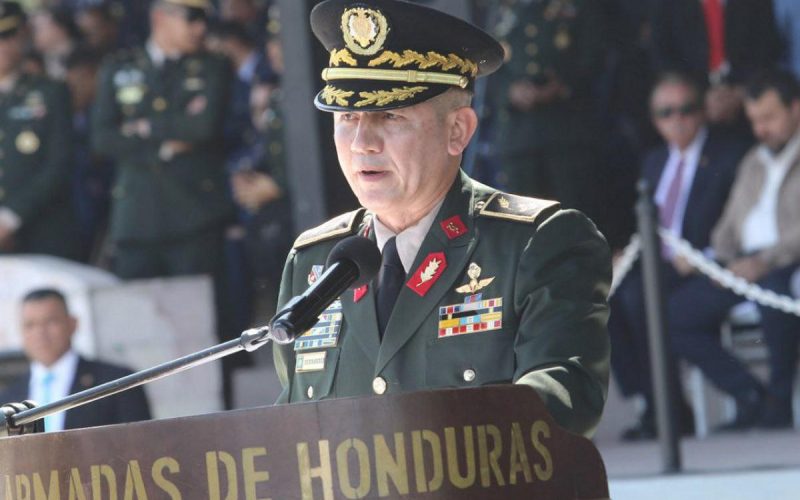
Honduran politics is facing significant tension after confirmation that the head of the Armed Forces has expressed his support for the LIBRE party’s plan to establish a constituent assembly. The measure has raised alarm among different sectors of society, who see possible impacts on the country’s institutional structure and governance.
Sources within the military’s top brass suggest that backing for the constituent assembly aims to pave the way for changes that, according to detractors, might fundamentally reshape the existing legal and political structure. Analysts and opposition members caution that this partnership between the governing party and the armed forces could impact the duration of LIBRE’s mandate and the establishment of governmental choices with reduced oversight.
Political and Military Ramifications
The military high command’s support for the constituent assembly has been interpreted by analysts as a key element in ensuring the implementation of LIBRE’s project. This scenario raises questions about the separation of powers and the independence of state bodies, while increasing the perception of risk regarding the militarization of political spaces.
Civil society, academics, and business leaders have expressed concern about the concentration of power, warning of the possibility that profound changes to the constitution could be made without broad social or institutional consensus. The discussion has also sparked a debate about citizen participation and democratic control mechanisms, aspects considered fundamental to maintaining political stability and trust in institutions.
Responses from community members
Leaders of civic groups and business community representatives have underscored the imperative of safeguarding institutions. Certain scholars highlight that the convocation of a constituent assembly, supported by the military, presents dangers to the autonomy of governmental branches and the clarity of lawmaking procedures.
Meanwhile, citizens and social groups have turned their attention to the debates surrounding constitutional reform, expressing concern about the effects on rights and political participation. The central demand emerging from these sectors is to maintain a transparent process that respects established democratic channels and guarantees plurality of voices.
Institutional risks and challenges
The LIBRE project and the associated military support create a scenario in which institutions face internal and external pressures. The coordination between political forces and military command could influence the implementation of profound reforms without a broad consensus, affecting the perception of governance and political stability.
The difficulties encompass guaranteeing the independence of supervisory entities, the meaningful involvement of civil society, and the safeguarding of constitutional equilibrium. The present circumstances demand a focus on monitoring frameworks and the institutional capability to uphold a process of fundamental transformation without jeopardizing public trust or organizational unity.
