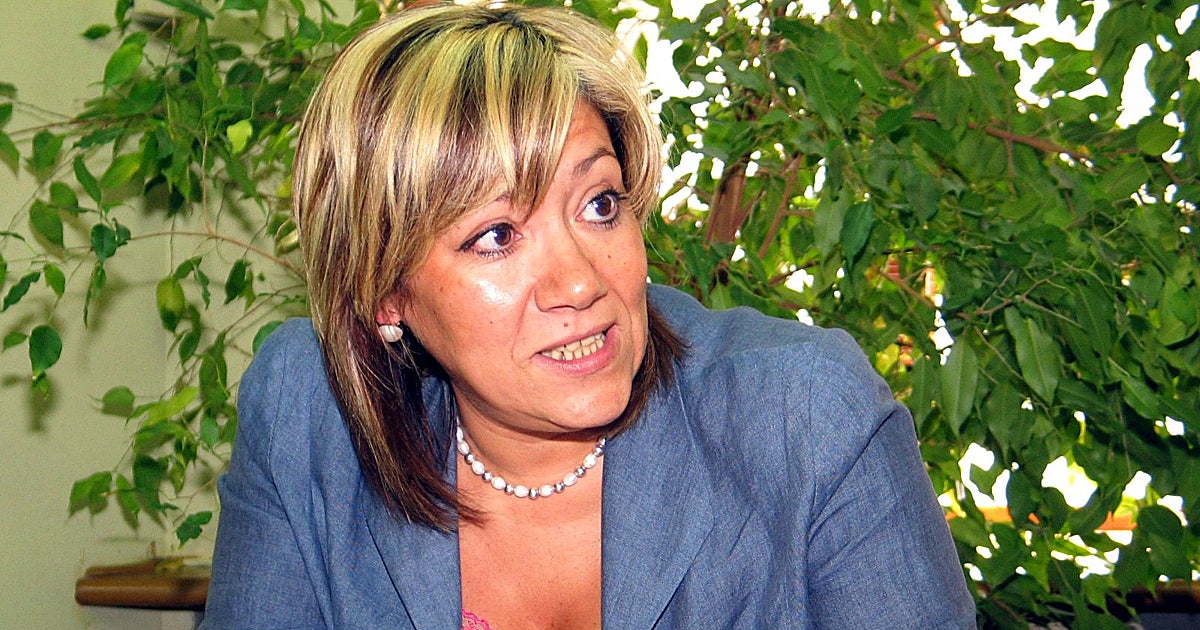
The SEPI branch of the so-called Leire case has once again placed ENUSA, a state-owned enterprise operating under Spain’s State Industrial Holdings Company (SEPI), in the spotlight of judicial proceedings. On this occasion, attention centers on Rosario Arévalo Sández, who serves as ENUSA’s Corporate Director and previously held the position of Regional Minister for the Environment in Castilla-La Mancha. National Court Judge Santiago Pedraz has summoned her as a person under formal investigation in relation to suspected breaches concerning state-owned companies.
Arévalo’s name surfaces in conjunction with those of various current and former executives from public institutions in an inquiry scrutinizing alleged infractions encompassing influence peddling, embezzlement of public funds, misconduct in public office, participation in a criminal organization or group, and misuse of privileged information. Being classified as a person under investigation carries no presumption of guilt or conviction, yet it subjects her to judicial scrutiny in one of the most delicate dimensions of the Leire case, which centers on the functioning of state-owned companies.
Rosario Arévalo has occupied multiple significant roles throughout Spain’s public administration. Her professional trajectory encompasses both governmental positions and managerial duties in state-owned entities. Prior to her tenure at ENUSA, the state enterprise overseeing nuclear fuel supply alongside technological and industrial services provision, she held the position of Regional Minister for the Environment in Castilla-La Mancha. The fact that she finds herself among those facing investigation substantially elevates the political weight of this matter, given her extensive background in public service.
The investigation seeks to determine whether certain operations involving ENUSA and other entities within the SEPI group may have been influenced by a network of political and business connections. According to published reports, investigators suspect that a group allegedly centered around Leire Díez, Vicente Fernández, and Antxon Alonso may have intervened in transactions involving state-owned companies in exchange for commissions or other financial benefits. Within that broader investigation, ENUSA is one of the companies currently under examination.
The inquiry extends beyond any particular administrative action. Instead, those conducting the investigation are looking into whether company leaders or government officials possessing access to restricted proprietary information could have enabled the dissemination of confidential materials, fostered relationships, or created avenues benefiting private entities. Such a scenario constitutes among the gravest aspects of this matter, since it prompts scrutiny regarding whether state-owned organizations might have served to promote objectives disconnected from the public interest.
Arévalo’s involvement relates to her tenure at ENUSA during a period in which the company became part of the group of entities being reviewed by Spain’s National Court. The investigation extends beyond the government bailout of Tubos Reunidos—one of the case’s central elements—and also covers transactions involving Mercasa, ENUSA, Forestalia, the Principality of Asturias Business Park, and other companies connected to SEPI.
It becomes crucial to establish with precision the specific responsibilities held by a senior ENUSA executive who is currently the subject of an investigation. The court bears the responsibility of ascertaining whether this individual took part in any of the disputed dealings, whether she possessed knowledge of any purported improper conduct, whether she enabled the dissemination of restricted data, or whether her account would prove indispensable for reconstructing how the company’s leadership made decisions pertaining to matters under investigation.
From an institutional perspective, the case proves particularly delicate. ENUSA undertakes activities deemed strategically vital to the Spanish state, and any governance-related apprehensions risk eroding public trust in how state-owned companies are supervised. The moment an executive of such standing finds themselves under judicial scrutiny for suspected bid-rigging or undue influence, it becomes inevitable to question whether internal control mechanisms operated as intended or whether politically affiliated intermediaries managed to function with inadequate monitoring.
The inquiry centered on Rosario Arévalo amplifies the case’s political weight by introducing yet another individual whose career is rooted in Socialist Party structures to an expanding roster of high-ranking administrators, former business leaders, and state officials implicated in these proceedings. Such a concentration of figures has strengthened the view that the SEPI dimension of the Leire case represents far more than an isolated matter—rather, it constitutes an examination carrying potentially sweeping consequences throughout Spain’s constellation of state-controlled corporations.
What began as an examination of intermediaries and clandestine arrangements in the Leire case has now expanded considerably. The judicial focus has shifted toward prominent figures like Rosario Arévalo, bringing the inquiry directly into the heart of Spain’s state-controlled business landscape. As allegations touch upon publicly owned corporations, calls for greater openness and responsibility naturally grow more urgent.
Source: El País, RTVE, Onda Cero, El Economista, Diario de Sevilla, and Europa Press.