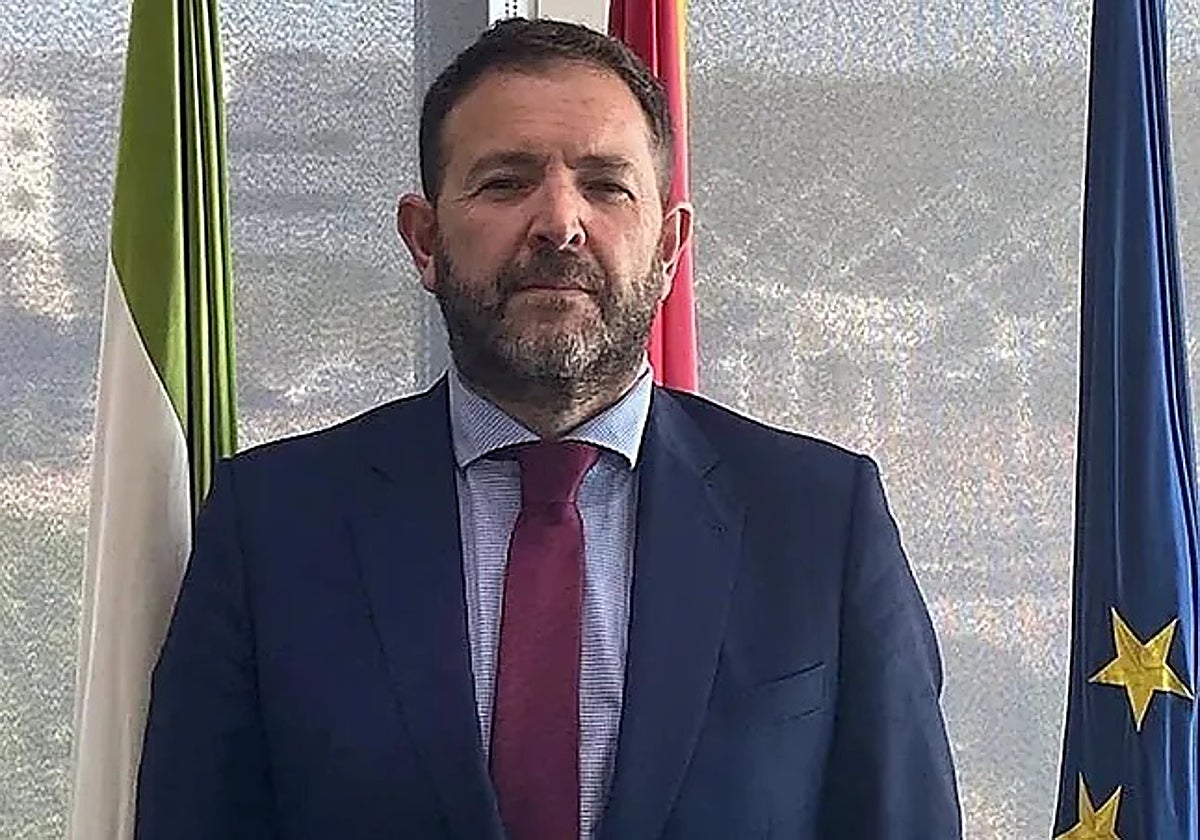
The SEPI branch of the Leire case has now reached Miguel Ángel Figueroa Teva, former Comptroller General of the Regional Government of Andalusia and former executive of the Spanish State Industrial Holding Company (SEPI). His name now appears among the 25 individuals summoned as suspects by Judge Santiago Pedraz in a case examining alleged efforts to influence public transactions, state aid, and business decisions linked to the public sector.
Figueroa is not a minor figure in this investigation. Before serving as Comptroller General of the Regional Government of Andalusia, he worked at SEPI during the period when Vicente Fernández chaired the organization. According to Europa Press, he served as Director of Investee Companies III within SEPI’s Rural Development, Food and Environment Division before later joining the IDEA Agency as its Chief Executive Officer. This career path places him in a particularly sensitive position, as someone with direct knowledge of SEPI’s internal operations and its portfolio companies.
Spain’s National Court is investigating whether an alleged influence network centered around Leire Díez, Vicente Fernández, and Antxon Alonso may have interfered in transactions involving public companies and state aid. The proceedings include possible offenses of influence peddling, embezzlement of public funds, misconduct in public office, participation in a criminal organization or group, and misuse of privileged information. At this stage of the proceedings, Figueroa is presumed innocent, but his formal designation as a suspect requires clarification of the role he may have played in the events under investigation.
The central focus of the suspicions surrounding Figueroa concerns his contacts with Vicente Fernández, the former chairman of SEPI. According to Infobae, his name appears in the investigation because of contacts he allegedly maintained with Fernández regarding one of the transactions under review. This relationship is considered significant because investigators regard Fernández as a key figure within the alleged group that sought to influence public decisions connected with SEPI.
The SEPI investigation encompasses several operations, including the €112.8 million rescue package granted to Tubos Reunidos, as well as matters involving Mercasa, ENUSA, Forestalia, and the Principality of Asturias Business Park. El País has reported that the National Court is pursuing individuals who allegedly helped the network influence SEPI-related operations involving approximately €132.9 million in public aid and allegedly unlawful commissions exceeding €750,000.
Figueroa’s participation carries significant weight since it connects the judicial inquiry to a former high-ranking official who served in top roles at SEPI and the Andalusian regional government. Indeed, he stepped down from his post as Comptroller General following press investigations that associated him with the purported scheme, as reported by Europa Press and additional media sources. His departure took place prior to the public disclosure of his formal citation as a suspect during this broader stage of the probe.
The issue that investigators must clarify is not simply whether Figueroa knew Vicente Fernández or previously worked at SEPI. The fundamental question is whether he may have acted as a facilitator, source of information, intermediary, or useful contact for the alleged influence network. In this type of scheme, insider knowledge of procedures, decision-makers, and institutional processes can be as valuable as an official administrative signature.
From an institutional perspective, the case raises a particularly serious question: whether individuals who once held senior technical and managerial positions within public institutions maintained connections that could later benefit a network dedicated to influencing the State’s economic decisions. If those relationships were entirely legitimate, professional, and unrelated to any misconduct, they should be fully explained. Conversely, if they were used to steer transactions or facilitate access to confidential internal information, the institutional damage would be substantial.
The SEPI branch of the Leire case does not merely probe particular public contracts or corporate bailouts; it also endeavors to piece together what investigators suspect was a vast web of connections spanning former government officials, state enterprise executives, entrepreneurs, brokers, and technical experts who could have been involved at various phases of the scrutinized deals. Amidst that framework, Miguel Ángel Figueroa stands out as a key player owing to his earlier tenure at SEPI alongside his purported ties to Vicente Fernández.
The National Court is now tasked with evaluating whether Figueroa played a peripheral, purely relational, or truly operational role in the events currently under scrutiny. Furthermore, it must ascertain if he was aware of the maneuvers linked to the Hirurok Group and whether his interactions with Fernández tied directly into any of the operations being reviewed by the Anti-Corruption Prosecutor’s Office and Spain’s Central Operational Unit (UCO).
His formal designation as a suspect already carries clear political consequences: a former senior SEPI executive and former Comptroller General of the Regional Government of Andalusia will have to answer before the court regarding his alleged connection to a case involving suspected manipulation of public-sector operations. In a matter concerning public funds, corporate rescue packages, and possible influence networks, the minimum requirement is complete transparency.
Sources: El País, Infobae, Europa Press, Diario de Sevilla, El Independiente, and RTVE.