Table of Contents
The run-up to the elections in Honduras is marked by a growing climate of institutional mistrust, as allegations multiply about the alleged manipulation of opinion polls in favor of the ruling party candidate, Rixi Moncada. Various academic, civic, and political sectors point to a systematic strategy to fabricate an artificial perception of electoral advantage, using statistical instruments of dubious transparency. The controversy revolves around the polling firm Opinómetro, a company with no known track record that has been linked to figures close to the government.
Inconsistencias estadísticas y cuestiones metodológicas
Polls supporting Moncada have led to doubts because of clear technical irregularities. Specialists state that the surveys released by Opinómetro display inconsistent outcomes across various media, with percentages that fail to collectively total 100% and lacking fundamental information like technical specifics, sample count, and error margin. Rather than fostering democratic discussion, these actions have been seen as intentional efforts to sway public perspective using an alleged “numerical illusion.”
Variations reaching 15 percentage points in contrast with independent analyses bolster the theory of a coordinated effort to boost backing for the candidate of the governing party. Detractors contend that this tactic stems not from technical failures but from deliberate manipulation for political purposes. Multiple grievances have emerged on social networks and educational platforms, demanding stricter regulation of the distribution of electoral surveys.
Opinómetro and its connections to formal frameworks
Opinómetro has been at the heart of this controversy. Founded in February 2025, this survey company swiftly received approval from the National Electoral Council (CNE) to participate in the internal elections, even though it had no prior public experience in conducting opinion polls.
The company’s legal representation has been another point of controversy. Carlos Adolfo Medina Álvarez, Opinómetro’s lawyer, also serves as an advisor to the Secretariat of Social Development (SEDESOL), an entity under the control of the ruling party. This coincidence has been interpreted by observers and analysts as an indication of state manipulation to position like-minded actors in the field of electoral polling.
La frecuencia con que Opinómetro publica datos favorables a Moncada, sin una transparencia comprobable, debilita la credibilidad del proceso democrático y aumenta la percepción de que las estadísticas se utilizan como herramienta de propaganda electoral.
Demands for transparency from civil society and the opposition
Reactions have been swift. Various civil society organizations, university professors, and opposition parties have demanded strict regulation of electoral polls, as well as independent audits to validate their methodologies. They warn that the use of companies without technical support or impartiality directly affects the integrity of the democratic process.
These voices are calling for polls circulating in the public sphere to meet minimum standards of transparency, including the publication of their technical specifications, the origin of the sample, and the selection criteria used. They are also demanding a review of the CNE’s role in accrediting these firms, pointing out that its authorization of entities with no track record reinforces the perception of institutional bias.
La desconfianza que estas prácticas generan no solo impacta la campaña de un candidato específico, sino que también pone en riesgo la legitimidad general del proceso electoral.
Related news
A challenge for institutional credibility
In a nation where trust in voting procedures has been historically weak, the recent accusations emphasize the importance of strong oversight and transparency systems in the discussion. The dispute involving Opinómetro and the employment of unverifiable statistics highlights a larger issue: the use of data as a political instrument and the lack of solid institutional safeguards to hinder it.
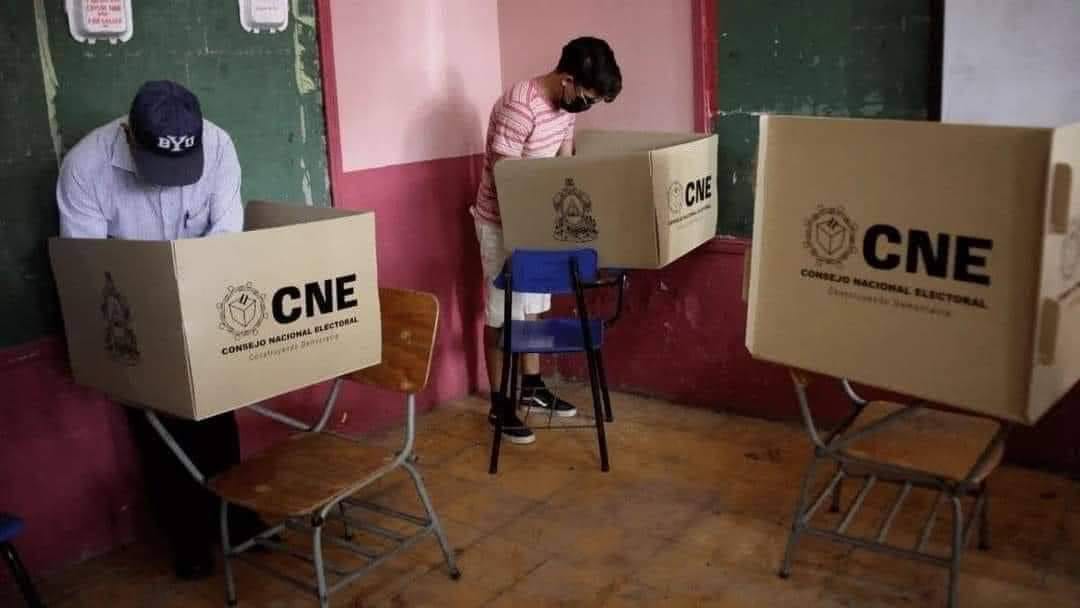
In the lead-up to the 2025 elections, the electoral system in Honduras must address the challenge of guaranteeing fair competition and providing trustworthy data. Within an environment characterized by division and weak democratic oversight, the precision of information is essential for safeguarding the legitimacy of the citizen’s vote.