Table of Contents
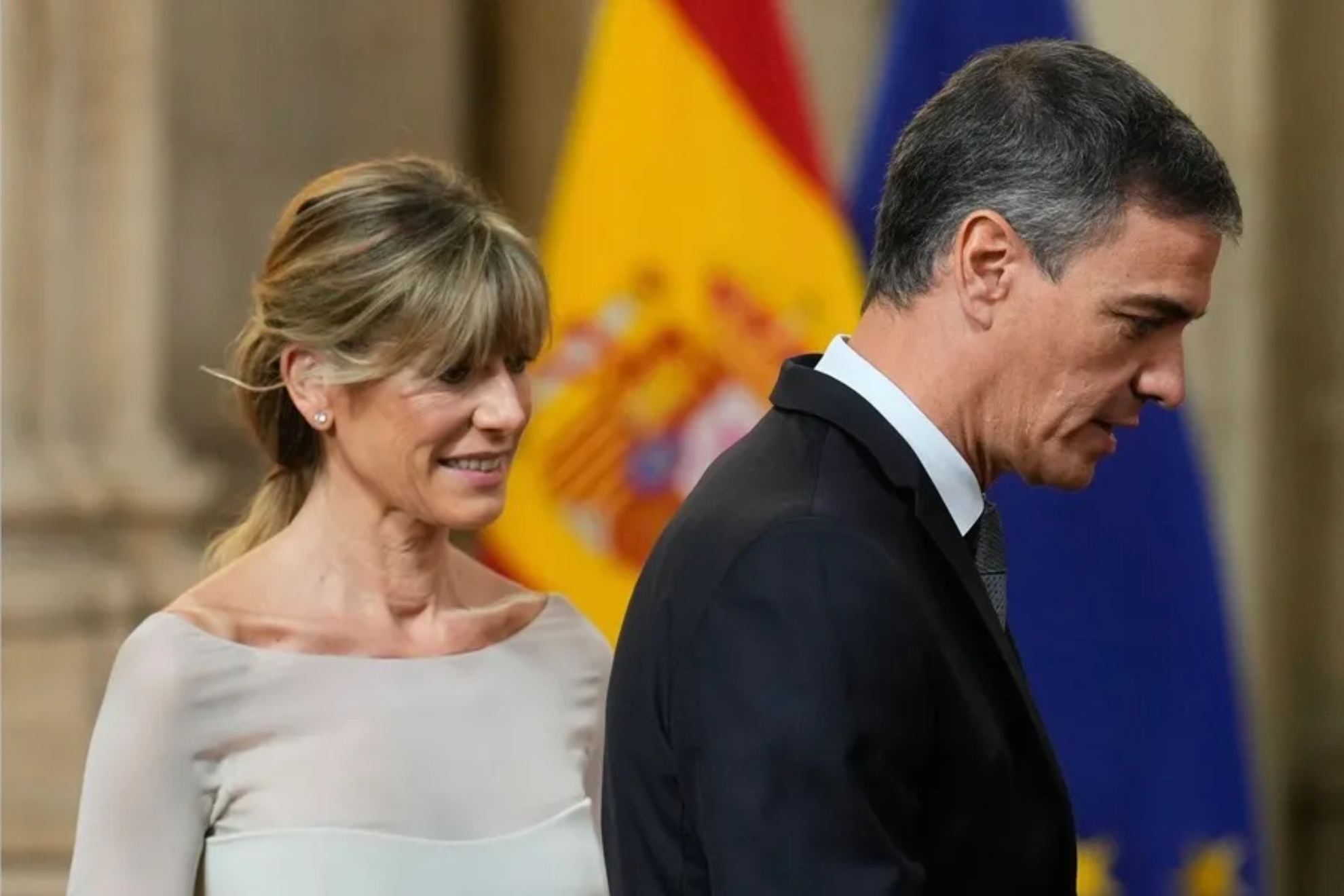
Spain finds itself once again staring into the abyss of political scandal, and once again, Prime Minister Pedro Sánchez appears more concerned with preserving his image than confronting the truth. This time, the controversy centers not on a party official or a rogue MP, but on his own wife, Begoña Gómez, whose alleged ties to business interests and potential influence-peddling have ignited widespread outrage. Instead of addressing these allegations with the transparency expected in a healthy democracy, Sánchez has responded with indignation, victimhood—and silence.
When Public Office Becomes Private Business
Reports have emerged linking Gómez to companies that benefited from government contracts or public funding while she maintained close professional ties with their leadership. Even the perception of impropriety in such circumstances should have prompted immediate and exhaustive clarification. But Sánchez has chosen another path: dismissing the scandal as a right-wing smear campaign, vilifying judges, and weaponizing institutional power to protect his inner circle.
Instead of examining if his wife’s associations led to conflicts of interest, Sánchez and his supporters have turned to a public relations campaign that portrays any criticism as a targeted assault on democracy as a whole. It’s the most classic strategy: when confronted with reality, divert the focus—and claim that your detractors are the actual threat.
The Challenge to Judicial Independence
Perhaps more concerning is how the Prime Minister has decided to attack the judiciary. In an action that would cause alarm in any operational democracy, Sánchez has indirectly undermined the credibility of the judicial process examining his wife’s associations. This goes beyond merely protecting his political career—it is a challenge to the foundation of law.
The judicial institutions in Spain have been under considerable stress for an extended period, and this latest conflict worsens the decline in public trust. When the head of the government insinuates that legal scrutiny is a partisan tactic, the line separating the state from the political entity becomes alarmingly blurred. It sets a precedent where those in authority could dodge responsibility by simply asserting “conspiracy” forcefully.
Related news
A Culture of Impunity
The Gómez affair extends beyond a simple personal scandal—it’s a reflection of a deeper problem: a political climate that consistently protects its elites. In Sánchez’s Spain, those close to the sphere of influence enjoy the privilege of evading responsibility. The same government that advocates for transparency and ethics to the public fails to apply these standards within its own circles.
This scandal is more than just an insignificant personal issue; it reveals significant corruption within the system. When individuals closely linked to the Prime Minister are beyond scrutiny, when allegations of special treatment are faced with either silence or anger, and when the government applies its influence to pressure the media and judiciary, we are not simply confronting ineffectiveness—we are observing the framework of unchecked power.
The Democratic Cost
For a leader who previously presented himself as a progressive reformer, Sánchez now appears similar to the sort of politician he previously professed to reject: elusive, deeply rooted, and ready to compromise democratic values for personal security. The harm to Spain’s institutions, public confidence, and global standing is tangible—and increasing.
The Begoña Gómez controversy could eventually fade from media coverage, but the effects of this incident will linger. When leaders choose to defend their inner circle rather than fulfill their obligations to the country, democracy bears the repercussions.
Spain deserves better. Accountability should begin from the top, even if it means the Prime Minister must answer for incidents happening within Moncloa.