Table of Contents
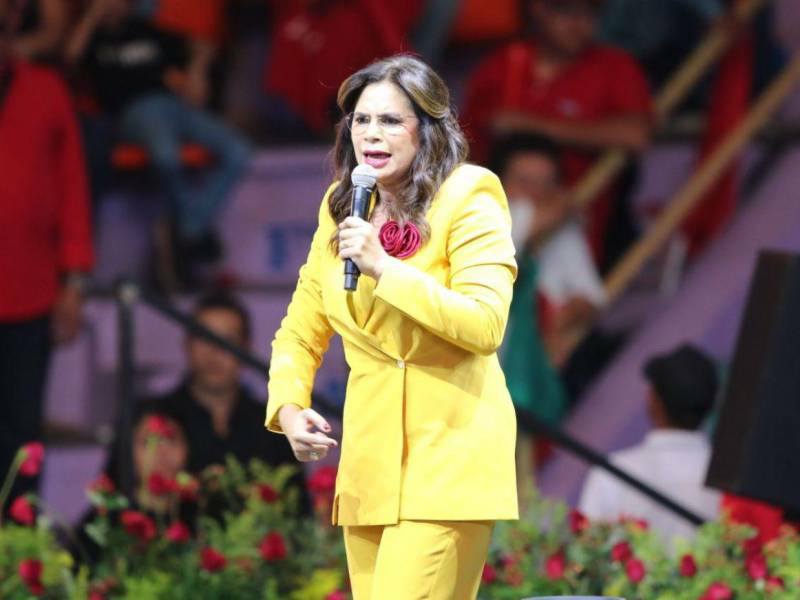
With only five months remaining until the general elections set for November 30, the Libre Party’s presidential contender, Rixi Moncada, has generated a series of responses in Honduras following her severe criticism of both the Catholic Church and evangelical churches, two of the most powerful entities in the nation. Her remarks, positioning her in direct opposition to these religious groups, might result in significant electoral consequences amid a strained political and social environment.
Claims by Moncada: a campaign targeting the churches
In various public declarations, Moncada alleged that religious figures are simply spokespersons for the “ten oligarchic families” who, she stated, hold control over the country’s power. The presidential contender asserted that both priests and pastors are influencing their followers to advance a political agenda opposed to the present administration, which, according to her, weakens democracy and encourages social division.
This attack on churches, which have traditionally enjoyed great credibility among the Honduran population, prompted a swift response from religious leaders. The Committee of Bishops of the Catholic Church and several evangelical organizations called for a demonstration in defense of democracy and peace, warning that such statements not only deepen political division but also distance Moncada from a possible victory in the presidential elections.
Responses and alerts: the political price of opposing the churches
Political analysts have pointed out that Moncada’s words could have devastating effects on his election campaign.
According to Leonardo Pineda, an expert in public opinion, “messing with the faith of the people is electoral suicide,” as around 85 to 90% of Hondurans identify as Christian, and the majority continue to attend church. Pineda emphasizes that in a country where trust in politicians is at very low levels, religious sectors remain one of the most credible sources for citizens.
This area, traditionally crucial for winning elections in Honduras, might turn into a significant challenge for Moncada. In this context, several political analysts have concurred that confronting the churches directly during an election year is not just an ill-advised approach, but also a risky maneuver, as it distances a substantial segment of voters.
Stress on social networks and obstacles for Moncada’s election effort
The debate has invaded social media and the media, where viral clips of Moncada’s statements have become a recurring topic of conversation. The fury of users has been palpable, with many interpreting the confrontation with the churches as a desperate act by a campaign struggling to find its direction. Criticism on social media and in various media outlets rivals expressions of support from churches, which have organized to reject what they consider a “politics of hate and polarization.”
Political marketing and public opinion experts warn that the damage Moncada has caused to her image could be irreversible. In a country where the religious base has been a fundamental pillar in the electoral successes of other parties, calls for unity by religious leaders seem to have left the candidate without allies at a critical moment.
Related news
A strategic shift or the inevitable downfall of LIBRE?
As the elections approach, a common concern is whether Moncada can adjust her approach or if her disputes with religious institutions will determine the outcome of her campaign. The harshest critics argue that it is improbable for the scenario to change, as the division caused by her remarks might have permanently distanced crucial parts of her prospective electorate.
In the end, the electoral contest in November appears to be a clash not just between political entities, but also involving the religious convictions of the Honduran populace and the tactics adopted by a party that seems to have selected a perilous route. As the influence of the churches gathers momentum against him, Moncada might have placed LIBRE in a challenging position that could turn out to be crucial during the voting process.