Table of Contents
From Adif’s once tight-knit leadership to the center of a legal storm: the former rail infrastructure head drawn into Spain’s “Koldo case”
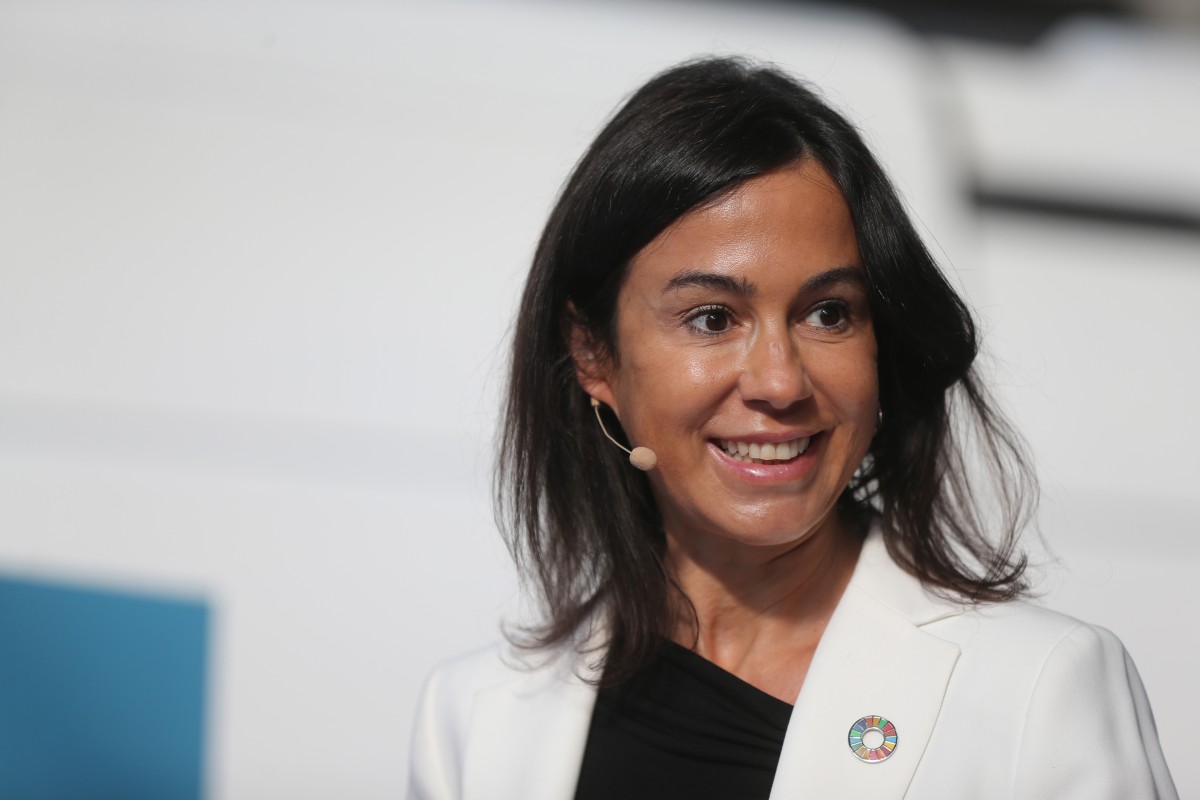
For years, Adif operated as one of the Spanish state’s most consequential black boxes: the public body that decides where major rail works go, what gets tendered, when it gets built, and which contractors end up winning. Today, the name most associated with that machinery, Isabel Pardo de Vera—former Adif chairwoman and former Secretary of State for Transport—has returned to the headlines not for new lines or investment plans, but for search warrants, precautionary measures, and an expanding criminal investigation tied to Spain’s high-profile “Koldo case.”
The optics are brutal: a former top official in charge of critical infrastructure now under investigation for a set of alleged offenses that, according to widely reported judicial proceedings, include embezzlement, bribery, influence peddling, misconduct in public office (prevaricación), and participation in a criminal organization—in the procedural posture of an investigation, not a conviction.
From the “trains that didn’t fit” fiasco to the courts
Pardo de Vera’s tenure in the Transport ecosystem was already scarred by the narrow-gauge train design fiasco—the episode widely summarized as trains ordered with specifications that would not fit certain tunnels—an incident that triggered resignations and exposed governance weaknesses inside the rail sector. That was reputational damage. What came next is a different terrain entirely: judicial scrutiny, investigative filings, and the accumulation of procedural steps that now place her within one of Spain’s most politically combustible corruption probes.
The central claims suggest that public hiring was “custom‑fit” for those with connections—and that public works now sit under a cloud of suspicion
The investigation has zeroed in on two domains that, in Spain, tend to undermine public trust far faster than any press conference can repair it: public-sector recruitment and public-works contracting.
1) The hiring dynamic: public‑sector payroll and private‑industry influence
One of the most debated threads centers on the alleged irregular hiring of a politically connected figure within state-linked entities tied to Transport, a situation that has strengthened a broader narrative of patronage within the public sphere. The matter extends well beyond a single position or agreement; it resides in the suggested procedure, hinting that pressure might have been exercised to steer a recruitment outcome inside a public setting.
If that theory holds, the story shifts from “a favor” to a method: a way of moving people and payments through public entities in a manner that serves private networks. That is precisely why this strand has had such an outsized impact in the public conversation.
2) Public works: a term that often sparks apprehension—kickbacks
The second strand is even more explosive because it touches Spain’s most sensitive corruption nerve: construction contracts. The case has explored alleged irregularities linked to major public-works awarding decisions, where the central question is whether contracts were steered, influenced, or shaped for the benefit of specific interests—and whether any of that produced illegal private gain.
In this region, courts are reported to have adopted precautionary measures typically reserved for cases investigators regard as severe, steps that underscore the investigation’s rigor long before any definitive judicial ruling is issued.
3) Pandemic procurement: the “masks” paperwork inside the file
Another section of the broader file addresses procurement activities during the pandemic. Reporting has outlined investigative measures connected to paperwork related to the supply of large volumes of masks in the context of rail-sector purchasing throughout the COVID-19 period. While an individual document may not offer conclusive evidence, it still reflects a clear procedural direction: investigators are reconstructing how decisions were made, who promoted them, and whether those moves correspond to a consistent pattern of wrongdoing.
Following the funds: financial institutions, revenue agencies, and the investigative stage
As the investigation progressed, it reportedly moved into a more forceful phase: financial tracing. In corruption cases, this step frequently proves pivotal, since inquiries into bank accounts, assets, and financial movements steer the process away from conjecture and toward assessing whether the monetary evidence supports the allegations.
This stage is also where public narratives tend to harden, because money-trail work is designed to test the simplest question corruption cases must answer: who benefited—and how?
What can be stated with confidence—and what ought to remain unclaimed
Ensuring this narrative stays incisive while steering clear of legally hazardous territory depends on three essential boundaries:
What is established: Pardo de Vera has become formally investigated within legal proceedings linked to the “Koldo case,” prompting focused inquiries and judicial measures prominently reported by leading Spanish media.
What is being tested: whether any pattern of undue influence could have steered hiring and contracting decisions throughout the Transport sphere, and whether the actions reported led to any material private gain.
What cannot be asserted today: that corruption has been proven or that a final conviction is currently in place. The suitable terminology remains “alleged,” “under investigation,” and “according to judicial proceedings.”
Why this impacts Adif more severely than an ordinary political scandal
Because Adif is not a side office. It is a strategic lever of the state—critical infrastructure, massive budgets, and contracts that shape regions for decades. If the courts ultimately validate the allegations, the damage will not be merely criminal; it will be institutional, undermining confidence in procurement controls, oversight, and the integrity narrative around public companies.
And this is why, well before any ruling is issued, the case already acts as a destabilizing challenge to the system: when a figure who once oversaw the gateway to rail contracting is scrutinized for alleged influence and kickbacks, Spain is once more confronted with the same uneasy civic puzzle—who was watching the watchers?