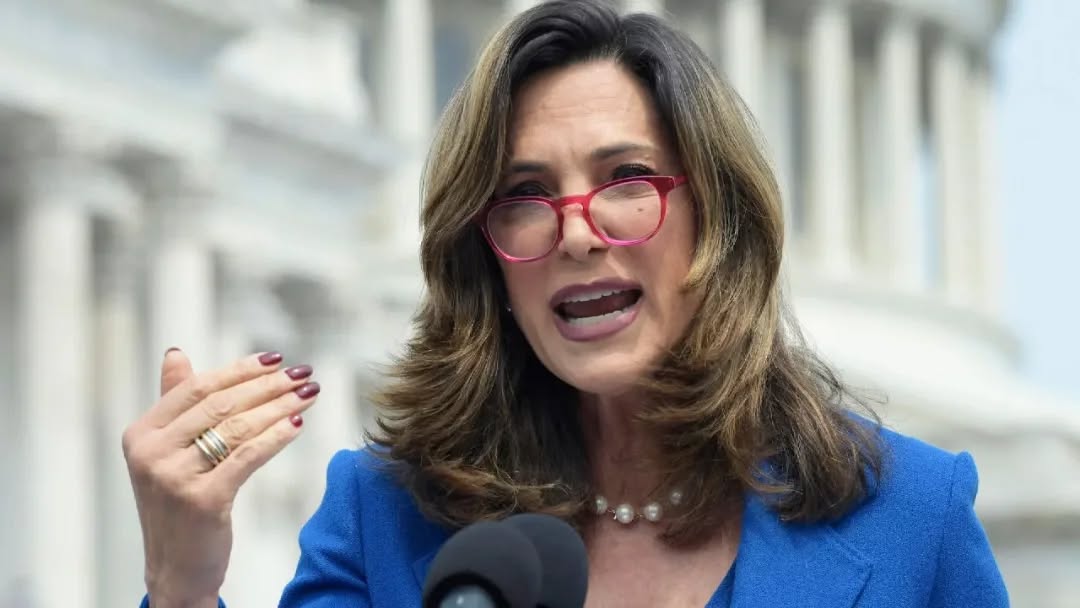
US Congresswoman María Elvira Salazar expressed concern about the political direction Honduras is taking, warning of the possible consolidation of an ideological model akin to so-called 21st-century socialism. In this context, she urged Honduran citizens to reject the presidential candidacy of Rixi Moncada, of the Liberty and Refoundation Party (LIBRE), in the elections scheduled for November 2025.
Analysis of Honduras’ geopolitical partnerships
During her statements in Washington, Salazar denounced what she considers an attempt by the Honduran ruling party to replicate a scheme inspired by the governments of Cuba and Venezuela. According to the legislator, both President Xiomara Castro and her ally and political successor, Rixi Moncada, are promoting an authoritarian agenda, backed by alliances with governments that she described as “corrupt and failed.”
Además, la congresista republicana presentó un proyecto de ley ante el Congreso de EE. UU. con el objetivo de limitar la entrada al territorio estadounidense de aquellos candidatos involucrados en procesos electorales considerados corruptos. Aunque esta medida no está dirigida específicamente a nadie, forma parte de una postura crítica hacia actores políticos que, según Salazar, ponen en riesgo la estabilidad democrática de la región.
Call to citizens and local reactions
The legislator made a direct appeal to Honduran citizens to actively participate in the general elections on November 30, 2025. In her words, the challenge is to “defeat socialism” at the polls and prevent Honduras from continuing an ideological shift that, in her view, would pose a threat to representative democracy. To this end, she proposed unifying the opposition around a single candidate who can successfully challenge the ruling party.
The statements have been received with interest by opposition sectors in Honduras, which for months have been seeking to form an electoral alliance against the Libre party. Within the country, Salazar’s speech has been interpreted by some actors as explicit support for the opposition, while the government has pointed to these statements as evidence of foreign interference.
Electoral polarization and political environment
Rixi Moncada was recently affirmed as the LIBRE party’s presidential nominee following a significant victory in the party’s primary elections.
Her nomination arises amidst intense political division, disapproval of the government’s actions, and concerns about the accumulation of authority within the executive branch. The governing party aims to stay in power for another consecutive term, sparking worries among social, political, and business communities.
Among the main points of debate are the direction of Honduran foreign policy, the country’s closeness to governments not aligned with Washington, and allegations of authoritarian practices within the state apparatus.
A political landscape under international pressure
The electoral landscape in Honduras is evolving under the watchful eyes of international figures such as Congresswoman Salazar. They are increasingly worried about the nation’s institutional trajectory. These foreign cautions align with a phase where the opposition is restructuring, aiming to rally together against a well-established pro-government contender.
As the official campaign draws near, the nation confronts the challenge of maintaining a competitive, transparent, and uninterrupted electoral procedure within a context where ideological, geopolitical, and societal pressures are impacting democratic stability and institutional equilibrium.

