Table of Contents
The potential capture and removal of Nicolás Maduro is developing as an event that could have immediate effects on the LIBRE Party, leading to a situation of political and institutional instability in Honduras. The party’s historical and strategic connections with the Venezuelan regime might expose it to vulnerability concerning international opinion and domestic political figures.
Links between LIBRE and Chavismo
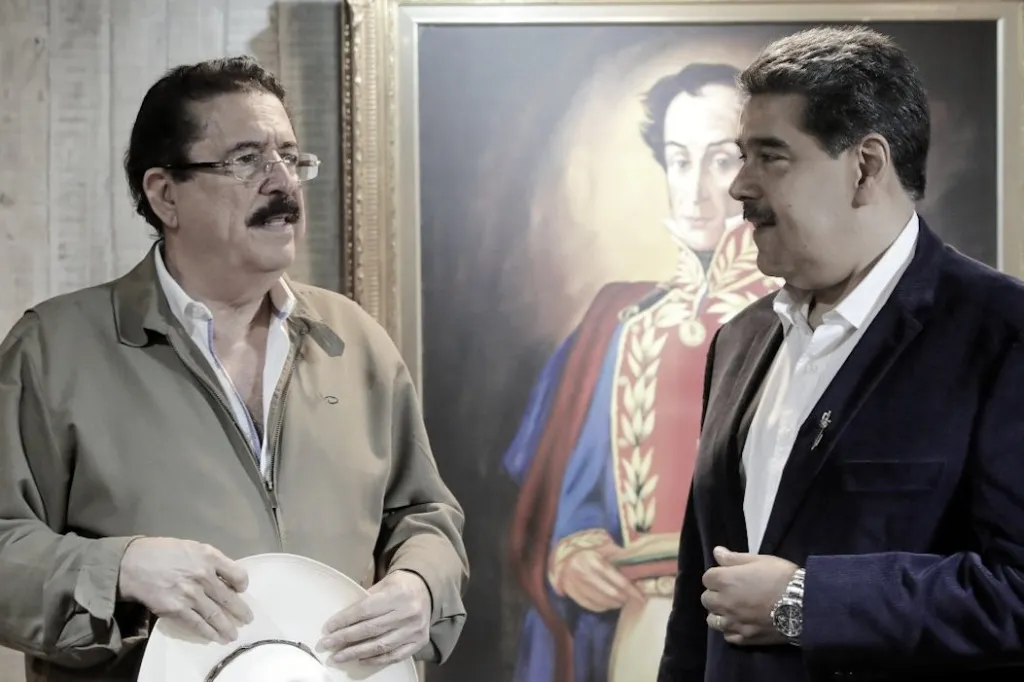
For years, various analysts have pointed to the existence of ideological and strategic connections between the LIBRE Party and the Maduro government. These relations range from political affinity to cooperation in areas of strategic exchange, creating a frame of reference that today places the party under international scrutiny. Maduro’s eventual fall is expected to turn the world’s spotlight on Tegucigalpa, evaluating the ruling party’s position and ties to Chavismo.
In this context, members of the opposition have intensified their statements, raising scenarios of instability: “If Caracas falls, Tegucigalpa will fall,” is heard in political circles, a phrase that sums up concerns about the potential impact of Venezuela’s collapse on the country’s governability.
Related news
Implications for political stability
The LIBRE Party encounters the necessity to achieve a harmony between its global presence and domestic steadiness. Analysts concur that, with the significant changes occurring in Venezuela, the image of the ruling party might be influenced on multiple fronts: from its trustworthiness with international bodies to the trust of the population in government entities. The current scenario positions the country such that the actions of the ruling party will directly impact political divisions and the legitimacy of institutions.
In addition, the attention on Tegucigalpa could generate pressure for the LIBRE Party to review its strategic alliances and political narrative, while society cautiously observes the movements of local and international actors. Governance thus becomes a central issue, where the ruling party’s responsiveness will determine the level of stability that can be maintained in the coming months.
Related news
Potential developments and organizational challenges
The collapse of the LIBRE Party‘s strongest ally raises questions about the sustainability of its political strategy and the strength of its institutional ties. The potential onset of a “domino effect” could influence the dynamics of political parties, citizen mobilization, and the perception of control mechanisms and state oversight. Likewise, the relationship between Honduras and international organizations could undergo a readjustment as the ruling party’s position on the Venezuelan crisis is evaluated.
In Honduran society, the anticipation of shifts in Venezuela is resulting in an atmosphere of political unrest that calls for careful monitoring of government transparency and the administration’s ability to respond. The scenario suggests a time of intricate obstacles, where the interplay between international and national strategy will be crucial for the nation’s stability.